
HAIR LOSS EXPLAINED: EVERYTHING YOU NEED TO KNOW (2026 Guide)
Reading time: 20 minutes
Last updated: July 2026
Reviewed for accuracy: July 2026
Who it's for: Anyone experiencing hair thinning, shedding, or hair loss, or researching treatment options.
Hair loss affects millions of people worldwide and is one of the most common concerns discussed with doctors, dermatologists, and hair restoration specialists. Whether you've noticed more hair in the shower drain, a widening part, a receding hairline, or thinning around your crown, it's natural to wonder what's happening and what you can do about it.
The good news is that not all hair loss is the same.
Some forms of hair loss are temporary and can improve once the underlying cause is addressed. Others are genetic and progressive, meaning they tend to worsen over time without treatment. Understanding the difference is the first step toward making informed decisions about your hair.
In this guide, we'll explain how hair grows, why hair loss happens, what's considered normal, and answer many of the questions people search for online every day. We'll also explore the treatment options available today, from medications and hair transplants to cosmetic solutions like scalp micropigmentation (SMP), so you can better understand which approach may be right for your situation.
Whether you're just beginning to notice subtle thinning or have been living with hair loss for years, this guide is designed to give you clear, evidence-based information without the myths or marketing hype.
TABLE OF CONTENT
What Is Hair Loss?
How Hair Normally Grows
Is It Normal to Lose Hair Every Day?
How Much Hair Loss Is Normal in the Shower?
Hair Shedding vs. Hair Loss
Early Signs of Hair Loss
Genetics
Hormones
Stress
Nutrition
Smoking
Medications
Illness
Scalp Conditions
Does Creatine Cause Hair Loss?
Does Wearing a Hat Cause Hair Loss?
Does Shampoo Cause Hair Loss?
Does Cutting Your Hair Make It Grow Faster?
Minoxidil
Finasteride
Hair Transplants
PRP
Lifestyle Changes
Hair Fibres
Hair Systems
Scalp Micropigmentation


What Are the Early Signs of Hair Loss?
Hair loss usually develops gradually rather than overnight.
Recognizing the early signs can help you seek advice sooner and better understand which treatment options may be appropriate.
Common early signs include:
A receding hairline.
Thinning around the crown.
Increased scalp visibility.
A widening part.
Reduced hair density.
More hair shedding than usual.
Hair that feels finer or weaker than before.
Not everyone experiences the same pattern. Some people first notice thinning at the temples, while others experience diffuse thinning across the entire scalp or patchy areas caused by specific medical conditions.
Key Takeaways
Losing 50 to 100 hairs per day is considered normal.
Hair grows in repeating cycles of growth, transition, rest, and shedding.
Temporary hair shedding is often different from permanent hair loss.
Genetics are the most common cause of long-term hair thinning, but stress, illness, medications, nutrition, and hormonal changes can also contribute.
Understanding the underlying cause is essential before choosing a treatment or cosmetic solution.
Now that we've covered how hair grows and what normal shedding looks like, let's look at the many factors that can contribute to hair loss—and separate the science from the myths.
UNDERSTANDING HAIR LOSS
What Is Hair Loss?
Hair loss, also known as alopecia, is the partial or complete loss of hair from areas where it normally grows. While it's often associated with male pattern baldness, hair loss can affect anyone regardless of age or gender.
Hair loss doesn't always mean you're going bald. In many cases, what people describe as "hair loss" is actually hair shedding—a temporary increase in the number of hairs that naturally fall out as part of the hair growth cycle. Other people experience gradual thinning caused by genetics, hormonal changes, certain medical conditions, medications, nutritional deficiencies, or prolonged physical or emotional stress.
Because there are many different causes, identifying the underlying reason for your hair loss is important before deciding on a treatment plan.
How Hair Normally Grows
To understand why hair falls out, it helps to understand how healthy hair grows.
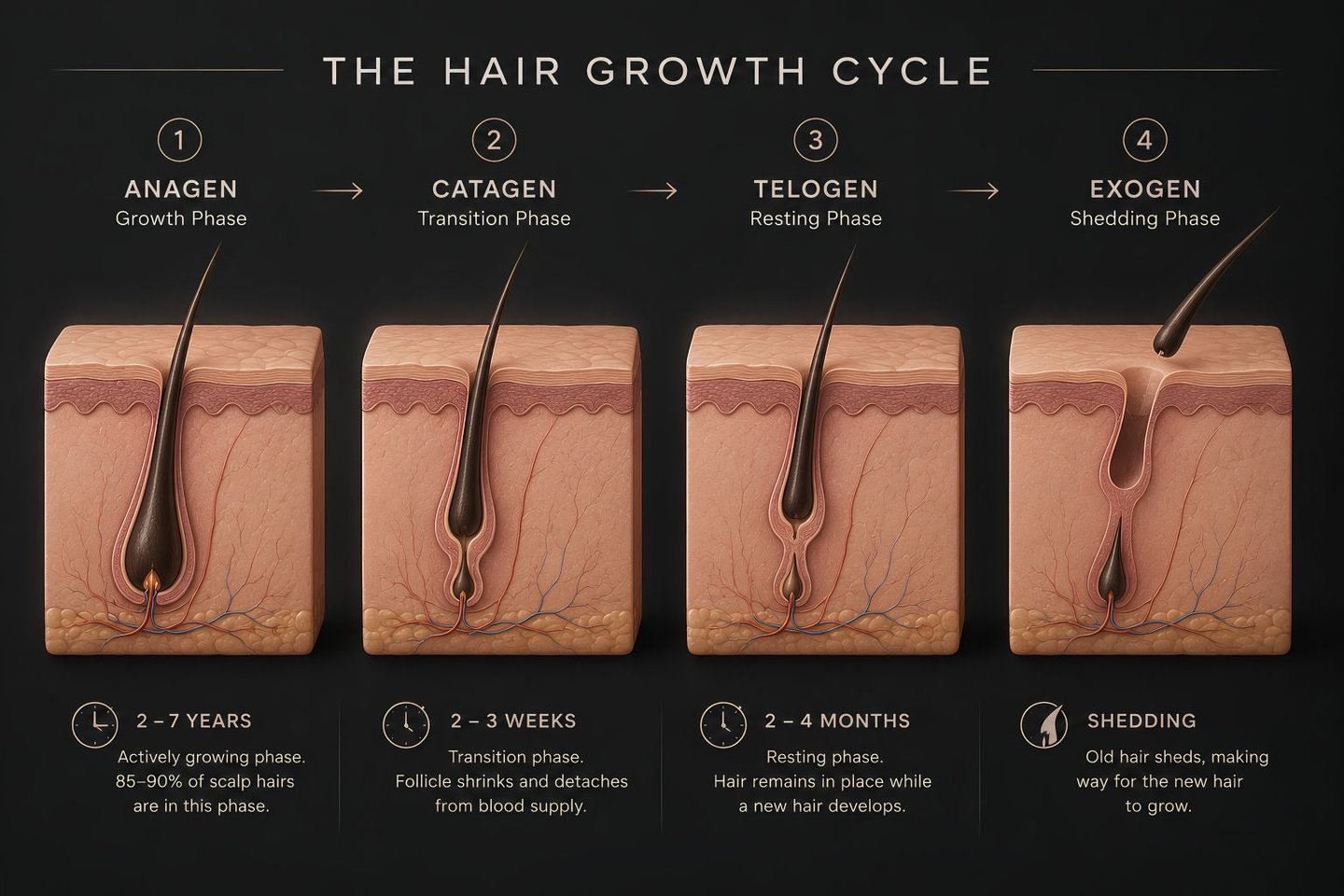
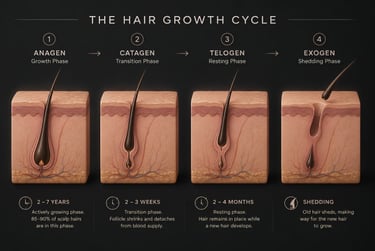
Each strand of hair grows from its own follicle beneath the surface of the scalp. Rather than growing continuously, every follicle follows a repeating cycle consisting of four distinct phases.
1. Anagen (Growth Phase)
The anagen phase is when your hair is actively growing. This is the longest stage of the cycle and typically lasts between 2 and 7 years, although genetics largely determine how long each person's growth phase lasts. At any given time, approximately 85–90% of the hairs on your scalp are in this phase. Longer anagen phases generally allow hair to grow longer before naturally shedding.
2. Catagen (Transition Phase)
The catagen phase is a short transition period lasting approximately 2 to 3 weeks. During this time, the hair follicle begins to shrink and detach from its blood supply. Hair growth stops, but the strand remains anchored within the follicle. Only a small percentage of hairs are in this phase at any given time.
3. Telogen (Resting Phase)
During the telogen phase, the follicle rests for approximately 2 to 4 months. The existing hair remains in place while a new hair begins developing beneath it. Around 10–15% of scalp hairs are typically in the telogen phase.
4. Exogen (Shedding Phase)
The exogen phase is when the old hair naturally sheds, allowing the new hair growing beneath it to emerge. This shedding is completely normal and happens every day as part of your scalp's natural renewal process. Because every hair follicle operates independently, you don't lose all your hair at once. Instead, follicles are constantly cycling through different stages, allowing your hair to maintain its overall density.
Is It Normal to Lose Hair Every Day?
Yes. In fact, it's completely normal to lose between 50 and 100 hairs each day. Most people never notice this because new hairs are continuously growing to replace the ones that naturally shed.
Daily shedding can become more noticeable when:
You wash your hair.
You brush or comb your hair.
Your hair is longer.
You wear dark clothing.
You haven't washed your hair for a day or two.
Seeing hairs on your pillow, in your brush, or in the shower isn't necessarily a sign that you're going bald.
The concern arises when the amount of hair shedding increases significantly, continues for several weeks or months, or is accompanied by visible thinning, widening parts, patchy bald spots, or a receding hairline.
How Much Hair Loss Is Normal in the Shower?
One of the most common questions people ask is whether the amount of hair they see in the shower is normal.
In most cases, the answer is yes.
Many hairs that naturally reached the end of their growth cycle remain loosely attached until they're dislodged by shampooing, conditioning, or running your fingers through your hair. This means it's perfectly normal to notice more hair on wash days than on days when you don't wash your hair.
If you only wash your hair two or three times per week, you may notice a larger amount of shedding during those washes because you're seeing several days' worth of naturally shed hairs all at once.
However, if you're consistently noticing large clumps of hair, progressive thinning, or bald patches, it's worth speaking with a healthcare professional or dermatologist for an evaluation.
Hair Shedding vs. Hair Loss: What's the Difference?
Although people often use the terms interchangeably, hair shedding and hair loss are not the same thing.
Hair Shedding
Hair shedding is usually temporary.
It occurs when a greater number of hairs than usual enter the shedding phase of the growth cycle. This can happen after events such as:
Significant emotional stress
Major surgery
Serious illness
High fever
Childbirth
Rapid weight loss
Certain medications
Because the follicles themselves remain healthy, normal hair growth often resumes once the underlying trigger has resolved.
Hair Loss
Hair loss refers to a reduction in the number or quality of functioning hair follicles.
This may happen gradually over many years—as with male or female pattern hair loss—or more suddenly due to autoimmune conditions, scarring disorders, or other medical causes. Unlike temporary shedding, some forms of hair loss are progressive and may not reverse without treatment.
Understanding whether you're experiencing increased shedding or true hair loss is one of the most important first steps in choosing the right solution.
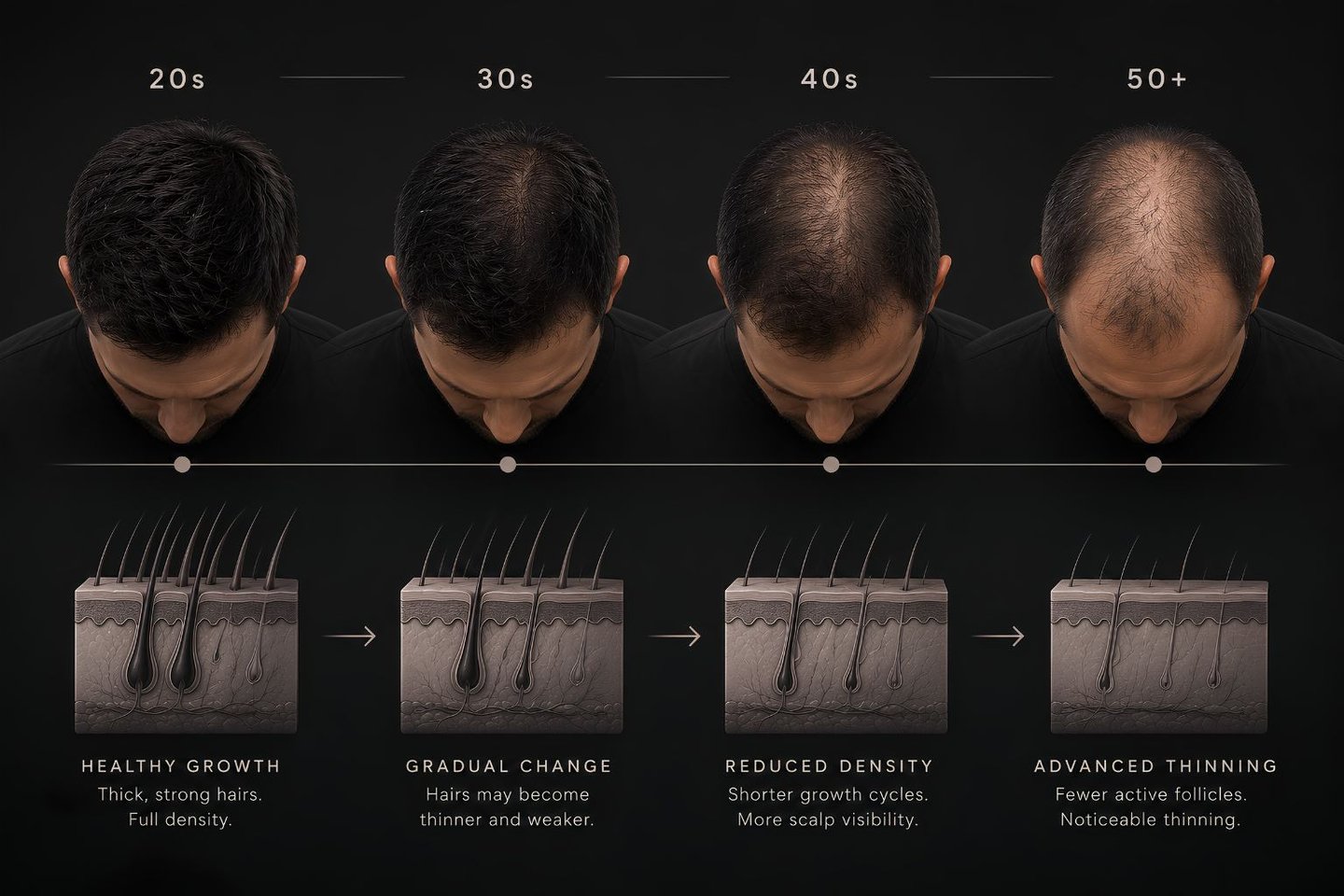
Why Does Hair Thin With Age?
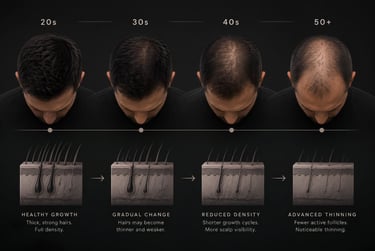
Hair naturally changes as we get older.
Over time, many hair follicles begin producing finer, shorter hairs than they did in earlier years. The hair growth cycle may also become shorter, meaning hairs spend less time actively growing before entering the resting and shedding phases.
For many people, age-related thinning occurs alongside genetic hair loss, making changes in density more noticeable. These changes are a normal part of aging, but they can vary significantly from person to person depending on genetics, hormones, overall health, and lifestyle factors.
Hormonal Changes
Hormones play a significant role in regulating the hair growth cycle. When hormone levels change, hair follicles can temporarily shift into the shedding phase or gradually produce finer hairs over time.
Hormonal hair loss may occur due to:
Pregnancy and childbirth
Menopause
Thyroid disorders
Polycystic ovary syndrome (PCOS)
Testosterone-related changes
Certain endocrine conditions
Women often notice increased shedding several months after giving birth. This is usually temporary and commonly resolves as hormone levels stabilize. Thyroid disorders can also affect both men and women, sometimes causing diffuse thinning across the entire scalp rather than a distinct pattern of baldness.
Because hormonal hair loss can have many different causes, diagnosis by a healthcare professional is often recommended if symptoms develop suddenly or are accompanied by other health concerns.
Stress
Yes—stress can contribute to hair loss.
One of the most common forms is telogen effluvium, a temporary condition in which a larger-than-normal number of hairs enter the resting (telogen) phase before shedding. Triggers may include:
Emotional trauma
Major surgery
High fever
Serious illness
Significant psychological stress
Loss of a loved one
Divorce
Job loss
Unlike genetic hair loss, stress-related shedding usually becomes noticeable two to three months after the stressful event, making it difficult for many people to identify the cause.
The good news is that hair often begins growing back once the body recovers and the underlying trigger has resolved, although it can take several months before noticeable improvement occurs.
Poor Nutrition
Healthy hair requires a steady supply of nutrients. Extremely restrictive diets, rapid weight loss, or inadequate intake of protein and key vitamins may contribute to increased shedding.
Nutrients commonly associated with healthy hair growth include:
Protein
Iron
Zinc
Vitamin D
Vitamin B12
Biotin (only when deficient)
It's important to note that taking supplements without a diagnosed deficiency is unlikely to improve hair growth for most people. If nutritional deficiencies are suspected, a healthcare provider may recommend blood testing before starting supplements.
Rapid Weight Loss
Crash dieting and significant weight loss can place considerable stress on the body. When this happens, the body may temporarily prioritize essential organs over hair production, causing more follicles to enter the shedding phase.
Hair loss related to rapid weight loss is often temporary, although recovery may take several months after nutritional intake returns to normal.
Smoking
Smoking has been linked to an increased risk of hair thinning. Researchers believe smoking may contribute by:
Reducing blood flow to hair follicles
Increasing oxidative stress
Promoting inflammation
Accelerating follicle aging
While quitting smoking doesn't guarantee hair regrowth, it offers numerous health benefits and may reduce one factor associated with ongoing hair loss.
Medications
Certain prescription medications list hair loss as a potential side effect. Examples include some medications used to treat:
High blood pressure
Depression
Blood clotting disorders
Autoimmune diseases
Chemotherapy
Hormonal conditions
Never stop taking a prescribed medication without speaking to the healthcare professional who prescribed it. If you believe a medication may be contributing to hair loss, discuss your concerns with your doctor, who may recommend an alternative where appropriate.
Illness and Surgery
Significant physical stress on the body can temporarily interrupt the normal hair growth cycle. Hair shedding may occur several months after:
Major surgery
Hospitalization
Severe infections
High fever
COVID-19
Chronic illness
In many cases, this type of shedding improves gradually as the body recovers.
Scalp Conditions
The health of your scalp plays an important role in maintaining healthy hair. Certain conditions may contribute to hair loss or increased shedding, including:
Psoriasis
Seborrheic dermatitis
Fungal infections
Chronic inflammation
Scarring alopecia
Persistent redness, itching, scaling, pain, or patchy hair loss should be evaluated by a healthcare professional or dermatologist.
Key Takeaways
Genetics remain the most common cause of permanent hair loss.
Many other causes—including stress, illness, medications, hormonal changes, and nutritional deficiencies—can lead to temporary shedding.
Identifying the underlying cause is important because different types of hair loss require different treatment approaches.
If your hair loss is sudden, severe, patchy, or accompanied by other symptoms, seeking medical advice is recommended before pursuing cosmetic treatment.
COMMON CAUSES OF HAIR LOSS
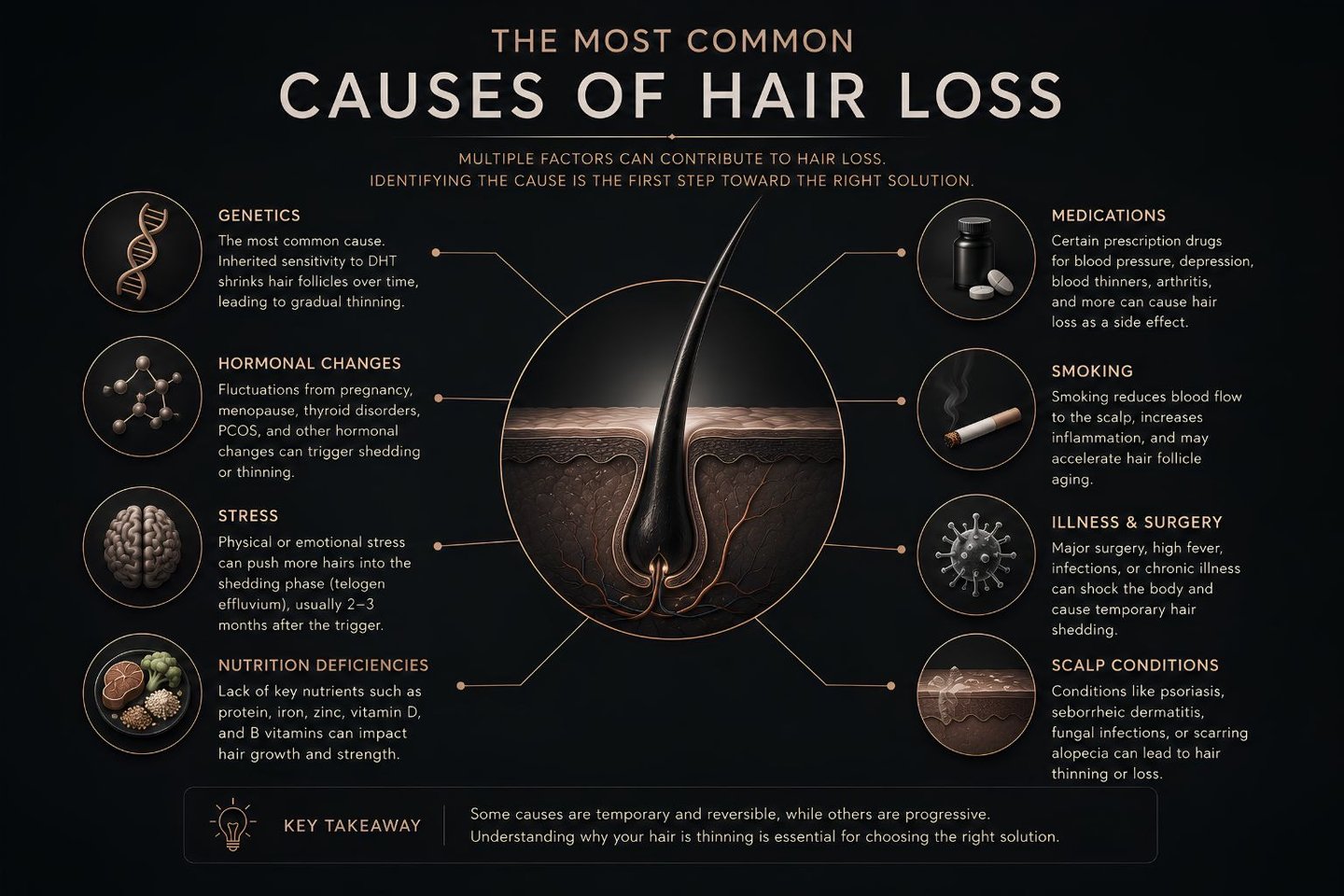
Hair loss isn't caused by a single factor. While genetics are responsible for the majority of permanent hair loss cases, many other factors—including stress, illness, hormonal changes, medications, nutritional deficiencies, and certain medical conditions—can also contribute to thinning or increased shedding.
Some causes are temporary and reversible, while others require long-term management or cosmetic solutions. Understanding the underlying cause is one of the most important steps in determining the most appropriate treatment. Below are some of the most common reasons people experience hair loss.
Genetics (Male & Female Pattern Hair Loss)
For most people, hair loss is hereditary.
Male pattern baldness (androgenetic alopecia) is the most common cause of hair loss in men, affecting millions worldwide. Women can also develop hereditary hair thinning, although it often presents differently.
This condition occurs when genetically susceptible hair follicles become increasingly sensitive to a hormone called dihydrotestosterone (DHT). Over time, DHT causes affected follicles to gradually shrink—a process known as miniaturization.
As follicles become smaller, they produce hairs that are:
Thinner
Shorter
Lighter in colour
Less noticeable
Eventually, some follicles stop producing visible hairs altogether.
Common signs in men
Receding temples
M-shaped hairline
Crown thinning
Horseshoe pattern of hair remaining around the sides and back
Common signs in women
Widening part
Diffuse thinning across the top of the scalp
Reduced overall volume
Usually preservation of the frontal hairline
Unlike temporary shedding, androgenetic alopecia is progressive. While treatments may help slow progression or preserve existing hair, the condition generally continues over time without intervention.
Is Genetic Hair Loss Permanent?
Genetic hair loss is generally considered permanent because the affected follicles continue to miniaturize over time.
However, "permanent" doesn't necessarily mean nothing can be done.
Depending on the individual, treatment options may include:
Medications such as minoxidil or finasteride
Hair transplant surgery
Cosmetic camouflage products
Hair systems
Scalp micropigmentation (SMP)
The best option depends on the extent of hair loss, personal goals, budget, and whether preserving existing hair or improving appearance is the primary objective.
HAIR LOSS MYTHS: SEPARATING FACT FROM FICTION
When you're worried about losing your hair, it's easy to come across conflicting advice online.
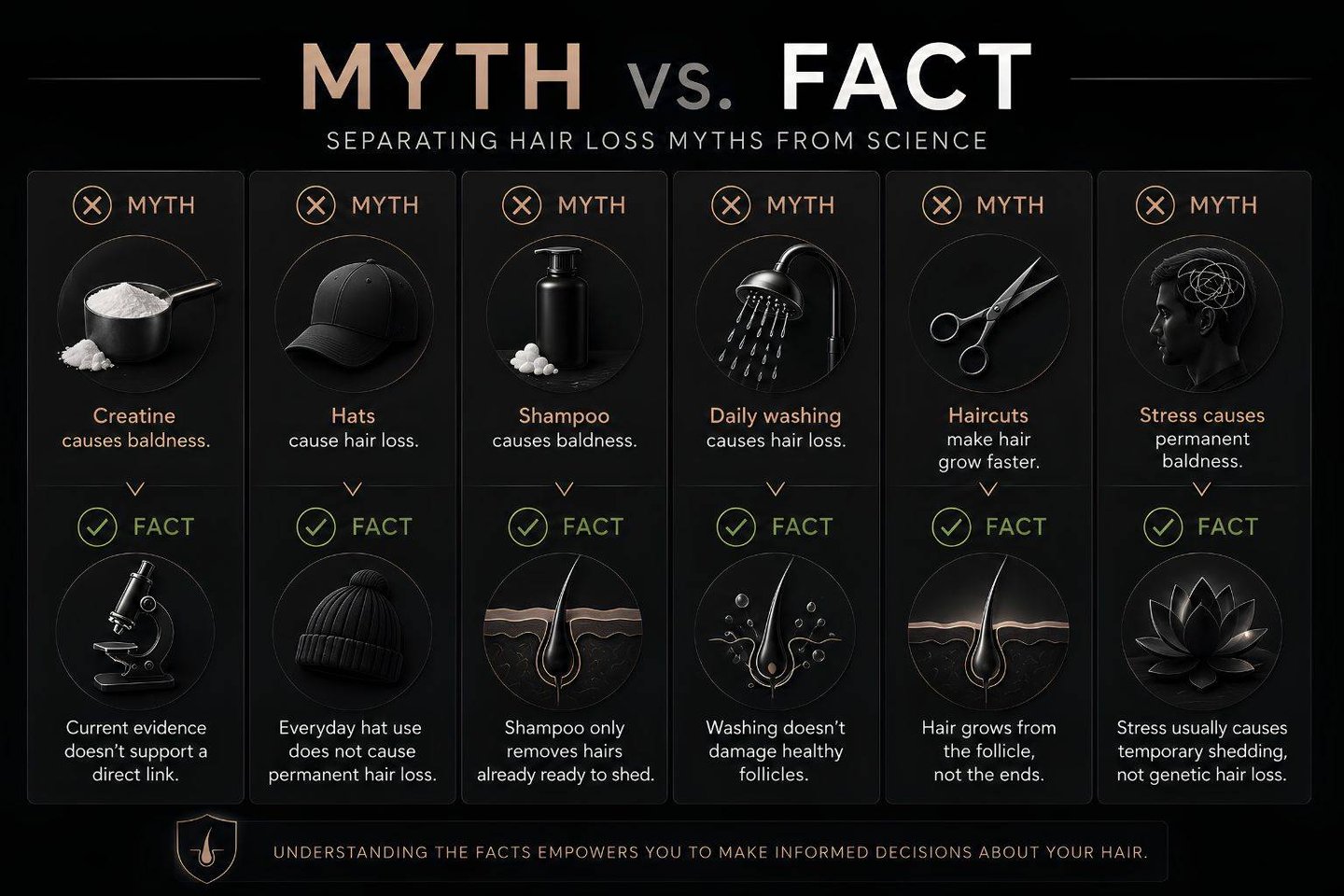
One website blames your shampoo. Another says it's because you wear hats. Social media might claim your pre-workout or creatine supplement is making you go bald, while someone else insists that shaving your head will make your hair grow back thicker.
The reality is that many of the most common beliefs about hair loss are either oversimplified or completely false. Below, we'll separate the myths from the evidence so you can make informed decisions based on current scientific understanding rather than internet rumours.
Does Creatine Cause Hair Loss?
Short Answer
There is currently no strong scientific evidence that creatine directly causes hair loss.
The Science
Creatine is one of the most widely studied sports supplements in the world. It has been extensively researched for improving strength, power, and athletic performance.
The concern surrounding creatine and hair loss largely stems from a small 2009 study involving college rugby players. Researchers observed an increase in dihydrotestosterone (DHT) levels after creatine supplementation. Because DHT is associated with male pattern baldness, many people assumed creatine must therefore cause hair loss.
However, it's important to understand that:
The study involved only a small number of participants.
It did not measure hair loss.
The findings have not been consistently replicated in larger studies.
To date, there is no convincing evidence that creatine causes hair follicles to miniaturize or directly accelerates male pattern baldness.
That said, if someone is already genetically predisposed to androgenetic alopecia, researchers continue to study whether hormonal changes could potentially influence progression. At present, the evidence remains inconclusive.
Key Takeaway
Current research does not support the claim that creatine directly causes hair loss.
Does Wearing a Hat Cause Hair Loss?
Short Answer
No. Wearing a hat does not cause male pattern baldness or permanent hair loss.
The Science
Hair follicles receive oxygen and nutrients through the bloodstream—not from the surrounding air. A properly fitting hat does not "suffocate" your hair or prevent follicles from functioning normally.
Very tight helmets or headwear worn continuously for long periods may occasionally contribute to traction alopecia, a type of hair loss caused by prolonged mechanical tension. However, this is very different from simply wearing a baseball cap, toque, or everyday hat.
Key Takeaway
If you enjoy wearing hats, there's no evidence to suggest they're making you go bald.
Can Stress Cause Hair Loss?
Short Answer
Yes. Significant physical or emotional stress can trigger temporary hair shedding.
The Science
One of the most common stress-related conditions is telogen effluvium.
Normally, most hairs remain in the active growth phase. After a significant physical or emotional stressor, a larger number of follicles can prematurely enter the resting phase before shedding several months later.
Common triggers include:
Major surgery
High fever
Serious illness
Divorce
Job loss
Loss of a loved one
Severe emotional stress
Unlike male pattern baldness, stress-related hair loss usually affects the entire scalp rather than a specific pattern. The encouraging news is that many people experience gradual regrowth once the underlying cause has resolved.
Key Takeaway
Stress can cause temporary hair shedding, but it does not directly cause genetic male pattern baldness.
Does Hair Grow Back After Stress?
Short Answer
In many cases, yes.
The Science
If the underlying cause is telogen effluvium, hair often begins growing back naturally after the body has recovered. However, recovery isn't immediate.
Because hair grows slowly—typically around 1 centimetre per month—it may take several months before noticeable improvement occurs.
If hair loss continues beyond six to twelve months or follows a typical pattern of male or female pattern baldness, another cause may also be contributing.
Key Takeaway
Stress-related hair shedding is often temporary, but patience is required because healthy hair regrowth takes time.
Does Shampoo Cause Hair Loss?
Short Answer
No. Shampoo does not cause permanent hair loss.
The Science
Many people notice hair collecting in the shower and assume shampoo is responsible.
In reality, shampoo simply helps release hairs that had already reached the natural shedding phase of the growth cycle. Unless you're experiencing an allergic reaction or irritation from a particular product, washing your hair is not causing you to lose it.
Maintaining a clean, healthy scalp may actually support overall scalp health.
Key Takeaway
Shampoo reveals hairs that were already ready to shed—it doesn't cause permanent hair loss.
Does Washing Your Hair Every Day Cause Hair Loss?
Short Answer
No.
The Science
Daily washing does not damage healthy hair follicles. The amount you wash your hair should generally depend on your hair type, scalp condition, lifestyle, and personal preference.
People with oily scalps may benefit from more frequent washing, while those with very dry or curly hair may prefer washing less often. Regardless of how often you wash your hair, the follicles beneath the skin continue following their normal growth cycle.
Key Takeaway
Frequent washing may increase the amount of shed hair you see, but it does not increase the amount of hair you lose.
Does Washing Your Hair Every Day Cause Hair Loss?
Short Answer
No. Hair grows from the follicle beneath the skin—not from the ends.
The Science
Haircuts improve the appearance of your hair by removing split ends and damaged strands. While freshly cut hair often looks healthier and fuller, trimming the ends has no effect on the rate at which new hair grows from the follicle.
Key Takeaway
Haircuts improve appearance—not growth speed.
Does Hard Water Cause Hair Loss?
Short Answer
There is little evidence that hard water causes permanent hair loss.
The Science
Hard water contains higher concentrations of minerals such as calcium and magnesium. Some people find that hard water leaves hair feeling dry, brittle, or difficult to manage.
While this may increase breakage of existing hair shafts, there is currently no strong evidence that hard water damages healthy hair follicles or causes male pattern baldness.
Key Takeaway
Hard water may affect hair texture, but it is unlikely to cause permanent hair loss.
Key Takeaways
Many popular hair loss myths are not supported by scientific evidence.
Genetics remain the most common cause of permanent hair loss.
Temporary shedding can occur after stress, illness, or significant life events.
If you're unsure why you're losing your hair, an assessment by a healthcare professional or dermatologist can help identify the underlying cause.
HAIR LOSS TREATMENTS: WHAT ACTUALLY WORKS?
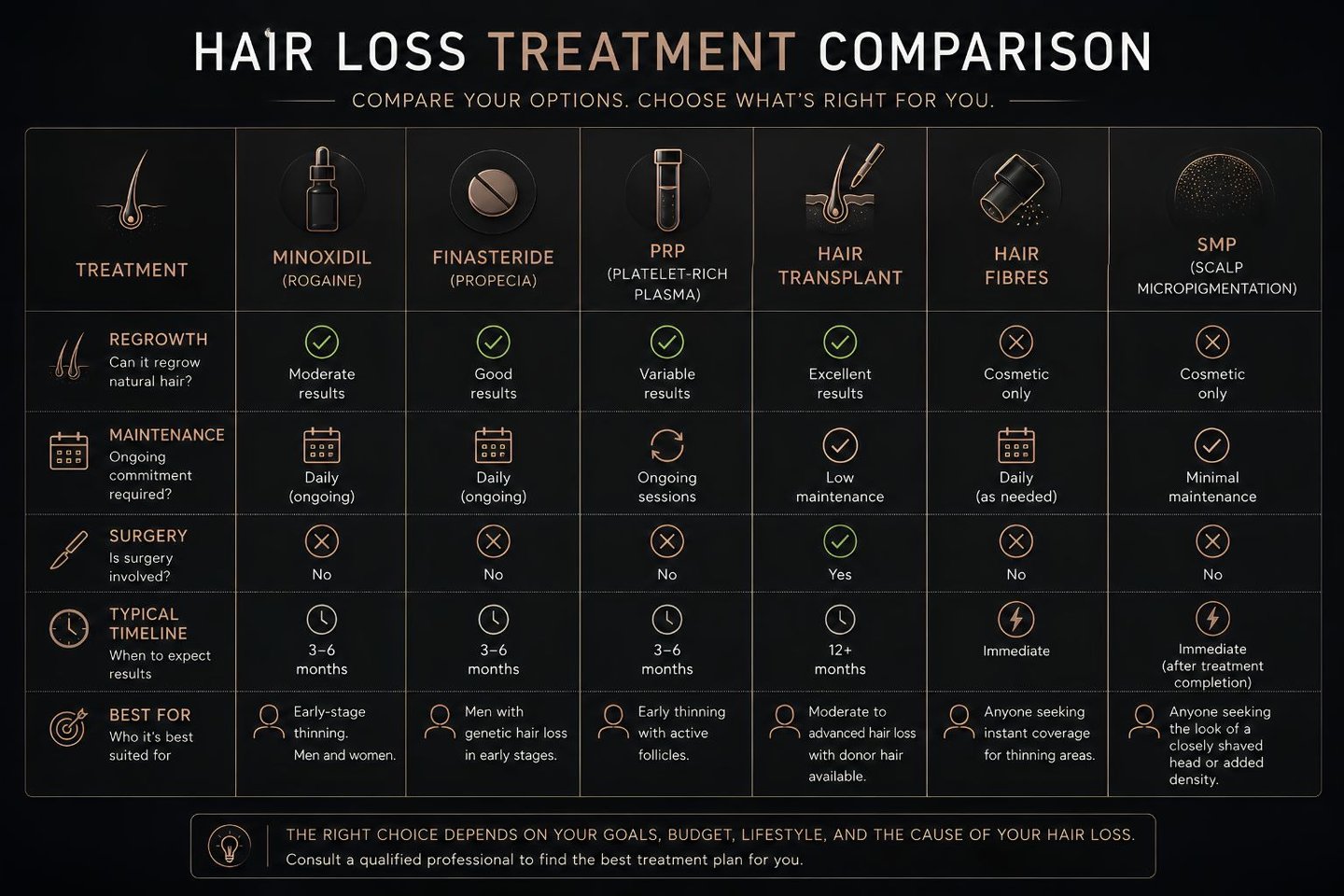
If you're experiencing hair loss, you've probably come across countless products claiming to stop shedding or regrow hair. From prescription medications to laser caps and supplements, the number of available treatments can be overwhelming.
The truth is that there isn't a single solution that works for everyone.
The most effective treatment depends on several factors, including:
The underlying cause of your hair loss.
Whether your hair loss is temporary or permanent.
How advanced your hair loss has become.
Your personal goals.
Your budget.
Your willingness to commit to ongoing treatment.
Below is an overview of some of the most common treatment options available today.
Can Hair Loss Be Reversed?
Short Answer
Sometimes. Whether hair loss can be reversed depends entirely on what's causing it.
Temporary Hair Loss
Many temporary forms of hair loss improve once the underlying cause has been addressed.
Examples include:
Stress-related shedding
Nutritional deficiencies
Illness
Certain medications
Hormonal fluctuations
Rapid weight loss
In these situations, healthy hair growth often resumes naturally, although it may take several months before noticeable improvement occurs.
Permanent Hair Loss
Genetic hair loss (androgenetic alopecia) is different. Once hair follicles have permanently miniaturized or stopped producing visible hairs, they generally cannot return to their original state naturally. While some treatments may slow progression or preserve existing hair, no treatment can guarantee complete restoration.
Minoxidil (Rogaine)
Best For
Early-stage male and female pattern hair loss.
How It Works
Minoxidil is a topical medication applied directly to the scalp. Although researchers don't fully understand every mechanism involved, it is believed to increase blood flow around hair follicles and extend the active growth phase of the hair cycle. This can help some people maintain existing hair and stimulate modest regrowth.
Pros
Available without a prescription in many countries.
Backed by decades of clinical research.
Suitable for both men and women.
Relatively easy to use.
Cons
Requires daily, ongoing use.
Results usually take several months.
Hair loss often resumes if treatment is discontinued.
Not everyone responds equally.
Finasteride (Propecia)
Best For
Men with hereditary male pattern baldness.
How It Works
Finasteride works by reducing the body's production of dihydrotestosterone (DHT), the hormone primarily responsible for follicle miniaturization in genetically susceptible men. Lower DHT levels can help slow hair loss and preserve existing hair. Some men also experience modest regrowth.
Pros
One of the most effective medications available for male pattern hair loss.
Strong long-term clinical evidence.
Convenient once-daily tablet.
Cons
Prescription required.
Not approved for women with pattern hair loss in most cases.
Potential side effects should be discussed with a healthcare professional.
Hair loss generally resumes if treatment stops.
Platelet-Rich Plasma (PRP)
Best For
People with early thinning who still have functioning hair follicles.
How It Works
PRP involves drawing a small amount of the patient's blood, concentrating the platelets, and injecting the platelet-rich plasma back into areas of thinning hair. The goal is to stimulate existing follicles using naturally occurring growth factors.
Pros
Uses your own blood.
Non-surgical.
Minimal downtime.
Cons
Multiple treatments are usually required.
Results vary considerably.
Ongoing maintenance sessions are often recommended.
Can become expensive over time.
Low-Level Laser Therapy (LLLT)
Best For
Early-stage pattern hair loss.
How It Works
Laser caps and laser combs emit low-level light that may stimulate follicle activity in some individuals. Research has shown modest improvements for certain patients, although results vary.
Pros
Non-invasive.
Can be used at home.
No recovery time.
Cons
Equipment can be expensive.
Results tend to be modest.
Requires ongoing use.
More independent research is still needed.
Hair Transplant Surgery
Best For
People with stable hair loss who have sufficient donor hair.
How It Works
Hair follicles are relocated from the back or sides of the scalp to thinning or bald areas. Because donor hairs are generally resistant to DHT, they often continue growing after transplantation. Modern techniques such as FUE (Follicular Unit Extraction) and FUT (Follicular Unit Transplantation) can produce natural-looking results when performed by experienced surgeons.
Pros
Permanent relocation of living hair follicles.
Natural hair growth.
Can significantly improve density.
Cons
Surgical procedure.
Recovery period required.
Higher upfront cost.
Limited by available donor hair.
Existing non-transplanted hair may continue thinning over time.
Nutritional Supplements
Best For
People with confirmed nutritional deficiencies.
How It Works
Certain vitamin or mineral deficiencies may contribute to increased shedding. Correcting these deficiencies can support normal hair growth. However, taking supplements without a diagnosed deficiency is unlikely to improve hair density.
Pros
Helpful when deficiencies exist.
Generally easy to incorporate into a routine.
Cons
Not a cure for genetic hair loss.
Many products make exaggerated marketing claims.
Blood testing may be appropriate before supplementation.
Cosmetic Solutions
Medical treatments aren't the right choice for everyone. Some people simply want to improve the appearance of thinning hair without taking lifelong medication or undergoing surgery.
Cosmetic options include:
Hair fibres
Hair systems
Hair transplant surgery
Scalp micropigmentation (SMP)
We'll explore each of these options in the next section so you can better understand the advantages and limitations of each.
Key Takeaways
The best treatment depends on the underlying cause of your hair loss.
Temporary shedding often improves once the trigger has resolved.
Medications such as minoxidil and finasteride can help slow hereditary hair loss for some people.
Hair transplants can restore hair using your own follicles but aren't suitable for everyone.
Cosmetic options can provide immediate improvements in appearance without necessarily changing the biology of the hair follicle.
If you're unsure which treatment is appropriate, consult a qualified healthcare professional or dermatologist before beginning any treatment plan.
COSMETIC SOLUTIONS FOR HAIR LOSS
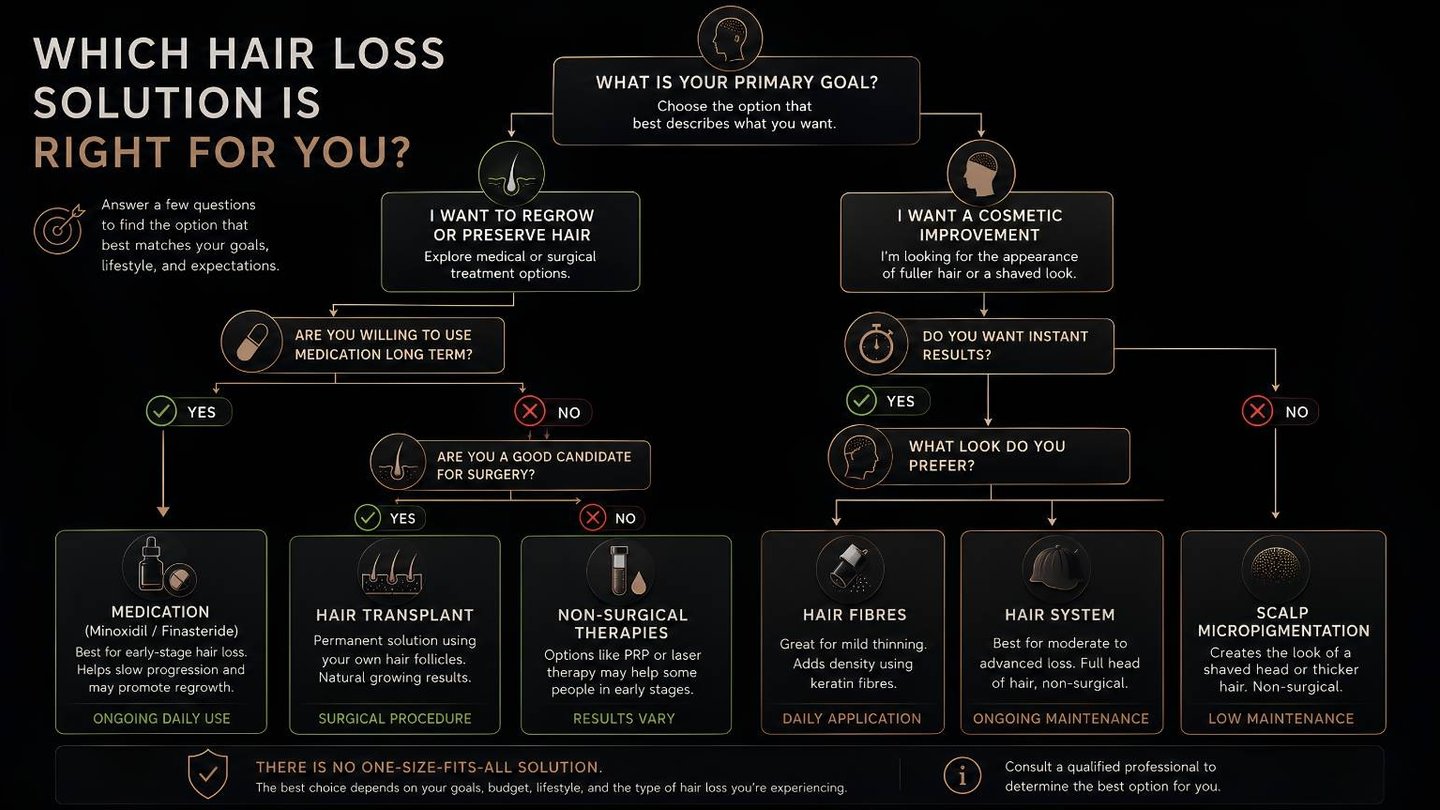
Not everyone experiencing hair loss wants medication or surgery. Some people simply want to restore the appearance of a fuller head of hair without committing to daily treatments, while others may not be candidates for a hair transplant or prefer a non-surgical option.
Fortunately, several cosmetic solutions are available. Each has its own advantages, limitations, maintenance requirements, and ideal candidates. Understanding the differences can help you choose the option that best fits your lifestyle and expectations.
Hair Fibres
Best For
People with mild to moderate thinning who still have existing hair.
How They Work
Hair fibres are tiny coloured keratin particles that cling to existing hairs using static electricity. By coating the hair you already have, they create the illusion of greater density and reduce scalp visibility.
Pros
Immediate results.
Affordable.
Non-invasive.
Available in multiple colours.
Easy to purchase online.
Cons
Require daily application.
Can wash out with water or heavy perspiration.
Less effective in areas with little or no existing hair.
Wind, rain, swimming, or exercise may reduce effectiveness.
Hair fibres can be an excellent temporary solution for people with early thinning, but they are generally less suitable for advanced hair loss.
Hair Systems (Hair Pieces)
Best For
People with moderate to advanced hair loss who want the appearance of a full head of longer hair.
How They Work
Modern hair systems use custom-made or stock hair pieces that are bonded to the scalp using medical-grade adhesives. High-quality systems can look remarkably natural when professionally fitted and maintained.
Pros
Immediate transformation.
Can provide a full head of hair.
Non-surgical.
Suitable for advanced hair loss.
Cons
Require ongoing maintenance.
Adhesives need regular replacement.
Ongoing costs can add up significantly over time.
Swimming, heavy sweating, and lifestyle factors may affect wear.
Require periodic replacement.
Hair systems have improved dramatically over the past decade and can be an excellent solution for some individuals willing to commit to regular maintenance.
Hair Transplant Surgery
Best For
People with stable hair loss and sufficient donor hair.
How It Works
Hair transplant surgery redistributes healthy hair follicles from the back and sides of the scalp into thinning or bald areas. Because the transplanted follicles continue growing naturally, results can be long-lasting.
Pros
Permanent relocation of living hair follicles.
Natural hair growth.
Can significantly improve density.
Proven long-term treatment.
Cons
Surgical procedure.
Recovery period.
Higher upfront investment.
Limited by donor hair availability.
Existing non-transplanted hair may continue thinning.
Many people combine hair transplantation with medical therapy to preserve their remaining native hair. Some also choose scalp micropigmentation after a transplant to create the appearance of additional density or camouflage donor scars.
Scalp Micropigmentation (SMP)
Best For
People seeking the appearance of fuller hair without surgery.
How It Works
Scalp micropigmentation is a highly specialized cosmetic tattoo that uses tiny, carefully placed pigment impressions to replicate the appearance of natural hair follicles. Rather than creating new hair, SMP creates the illusion of increased density or a closely shaved hairstyle. When performed correctly using high-quality pigments and appropriate technique, the results can appear remarkably natural.
Common Uses
Create the appearance of a freshly shaved head.
Increase the appearance of density in thinning hair.
Reduce the contrast between hair and scalp.
Camouflage hair transplant scars.
Conceal certain scalp scars.
Improve the appearance of some forms of alopecia.
Pros
Non-surgical.
Immediate cosmetic improvement after treatment completion.
No daily styling products required.
Weatherproof.
Suitable for many stages of hair loss.
Can complement hair transplant surgery.
Can Treatments Be Combined?
Absolutely. Many people achieve the best cosmetic outcome by combining treatments.
Examples include:
Hair transplant + SMP for additional visual density.
Minoxidil + SMP.
Finasteride + SMP.
PRP + SMP.
Hair fibres + SMP during the treatment process.
Rather than competing with medical treatments, scalp micropigmentation often works alongside them by improving the visual appearance of hair while medical therapies focus on preserving existing follicles.
Key Takeaways
There is no single cosmetic solution that's right for everyone.
Hair fibres, hair systems, hair transplants, and scalp micropigmentation all have legitimate roles depending on the individual's goals.
The best results often come from choosing a solution that matches your lifestyle rather than simply following trends.
If you're considering SMP, choosing an experienced practitioner exclusively in SMP is one of the most important factors influencing your final result.
Final Thoughts
Hair loss is incredibly common, and for many people, it's simply a natural part of life. The most important thing to remember is that there isn't a single cause—or a single solution.
Some people benefit from medical treatment. Others choose surgery. Many simply want to improve the appearance of their hair without changing the biology behind it. The right choice depends on your individual circumstances, your expectations, and your long-term goals.
If you're considering scalp micropigmentation, take the time to research practitioners carefully, review healed results, ask questions, and choose someone who specializes in the procedure. An informed decision is almost always the best decision.Existing non-transplanted hair may continue thinning.
READY TO EXPLORE YOUR OPTIONS?
If you've been researching hair loss and are wondering whether scalp micropigmentation could be the right solution for you, we'd be happy to help.
At Toronto Scalp Micropigmentation Studio, we specialize exclusively in SMP and take an education-first approach. Whether you're experiencing early thinning, advanced hair loss, alopecia, or looking to enhance the results of a previous hair transplant, we'll take the time to answer your questions, explain your options, and provide honest recommendations based on your goals.
Book a free consultation to discuss your hair loss, explore your options, and see whether scalp micropigmentation is the right fit for you.