Hair loss affects millions of women, but unlike men, female pattern hair loss usually doesn't begin with a receding hairline. Instead, it often appears as gradual thinning across the top of the scalp, making the part line wider and reducing overall hair density.
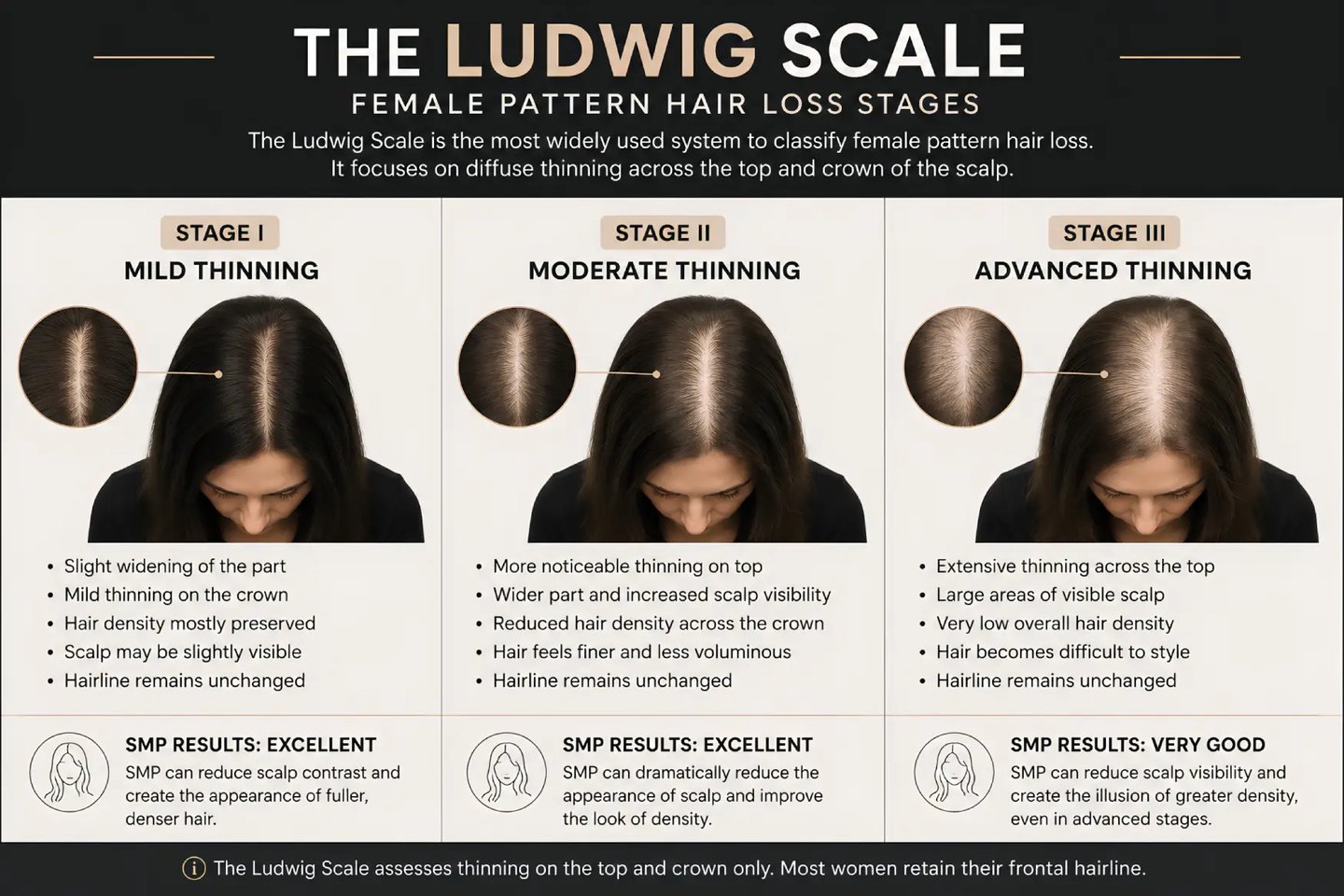
The Ludwig Scale is the most widely used medical system for classifying female pattern hair loss. It divides hair loss into three progressive stages, helping dermatologists and hair restoration specialists assess severity and recommend appropriate treatment options.
Whether you're just beginning to notice thinning or have experienced hair loss for years, understanding your Ludwig stage can help you make informed decisions about treatment—including whether scalp micropigmentation (SMP) may be right for you.
What Is the Ludwig Scale?
The Ludwig Scale was introduced in 1977 by German dermatologist Dr. Erich Ludwig as a way to classify female pattern hair loss (also called female pattern androgenetic alopecia).
Unlike the Norwood Scale used for men, the Ludwig Scale focuses on diffuse thinning across the crown and top of the scalp while the frontal hairline usually remains intact.
Today, it remains one of the most widely recognized systems used by dermatologists and hair restoration professionals worldwide.
Ludwig Scale Stages
Ludwig Stage I: Mild Hair Thinning
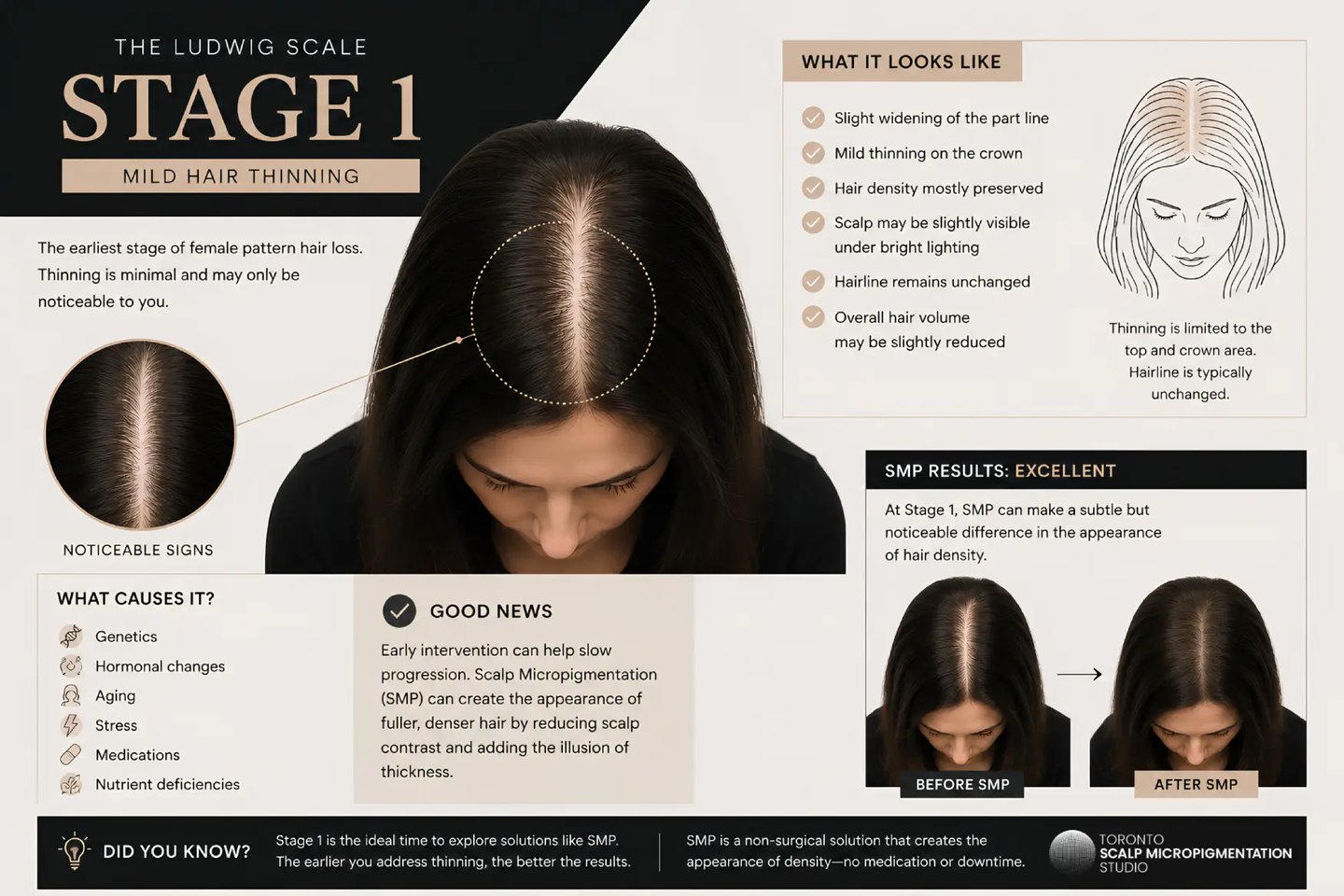
This is the earliest stage of female pattern hair loss. You may notice:
A slightly wider part line
Mild thinning on the crown
Reduced hair volume
Scalp becoming visible under bright lighting
Hairline remains unchanged
Many women first notice Stage I while styling or washing their hair.
Can SMP Help?
Yes. Stage I is often one of the best times to consider scalp micropigmentation because SMP can reduce scalp contrast and create the illusion of thicker, fuller hair without shaving your head.
Ludwig Scale Stages
Ludwig Stage II: Moderate Hair Loss
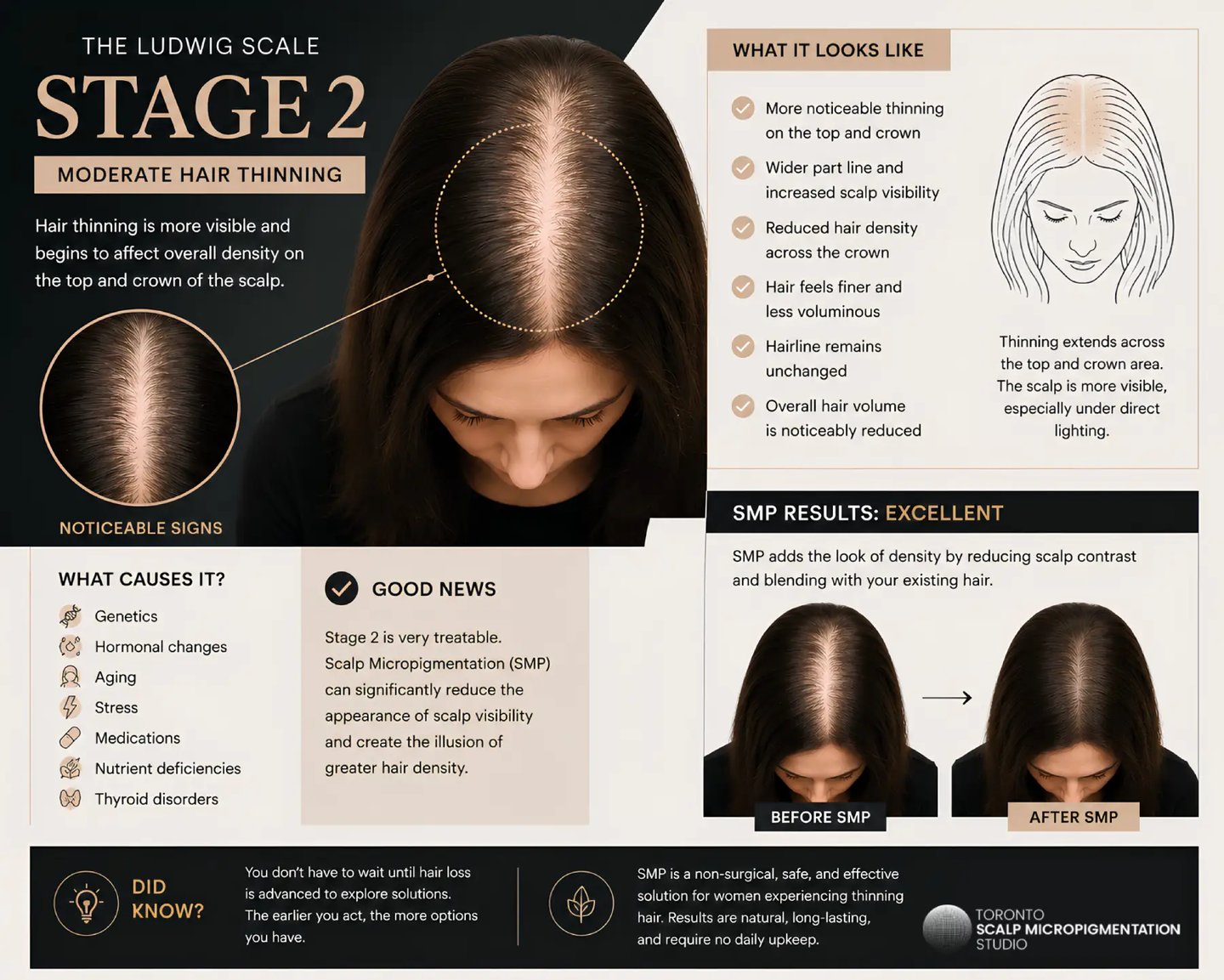
Hair thinning becomes much more noticeable. Common signs include:
Clearly visible scalp
Significant reduction in hair density
Wider central part
Crown thinning
Hair feels noticeably finer
Many women begin exploring cosmetic solutions during this stage because hairstyles become harder to maintain.
Can SMP Help?
Absolutely. SMP can dramatically reduce the appearance of visible scalp and create the illusion of greater density throughout thinning areas.
What Causes Female Pattern Hair Loss?
Several factors can contribute to hair thinning, including: genetics, hormonal changes, menopause, aging, stress, thyroid disorders, iron deficiency, and certain medications.
Not all hair loss is female pattern hair loss. A medical evaluation can help determine the underlying cause before pursuing treatment.
Is the Ludwig Scale Always Accurate?
The Ludwig Scale is an excellent guide, but it isn't perfect.
Some women experience hair loss patterns that don't fit neatly into its three stages. Dermatologists may also use more detailed systems, such as the Savin Scale or Sinclair Scale, particularly when assessing early hair thinning or monitoring progression over time.
How Scalp Micropigmentation Helps Women
Scalp micropigmentation is a non-surgical cosmetic treatment that creates thousands of tiny pigment impressions designed to replicate natural hair follicles. For women experiencing diffuse thinning, SMP works by reducing the contrast between the scalp and existing hair, making hair appear fuller and denser.
At Toronto Scalp Micropigmentation Studio, we use premium Ghost Ink® medical-grade pigments and customized layering techniques to produce soft, natural-looking density enhancement that blends seamlessly with your existing hair. Unlike hair fibers or topical concealers, SMP won't wash out in the rain, sweat, or while swimming.
Ludwig Scale Stages
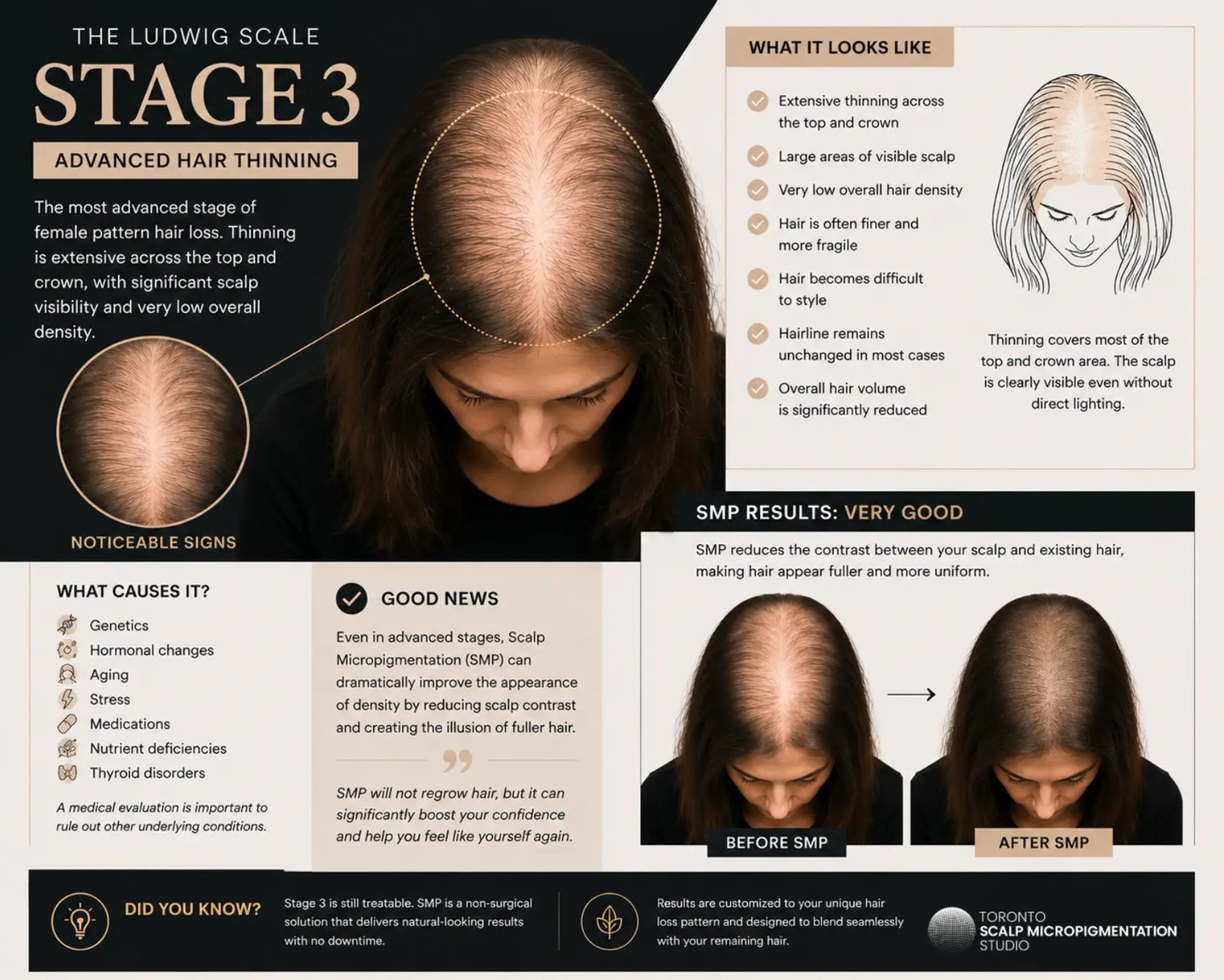
Ludwig Stage III: Advanced Hair Loss
This is the most severe stage of the Ludwig Scale. Women may experience:
Extensive thinning across the top of the scalp
Large areas of visible scalp
Very low overall density
Hair becoming difficult to style
Unlike male pattern baldness, complete baldness remains relatively uncommon in women, even during advanced stages.
Can SMP Help?
Yes. SMP cannot regrow hair, but it can significantly reduce scalp visibility and improve the appearance of density, especially when some existing hair remains.